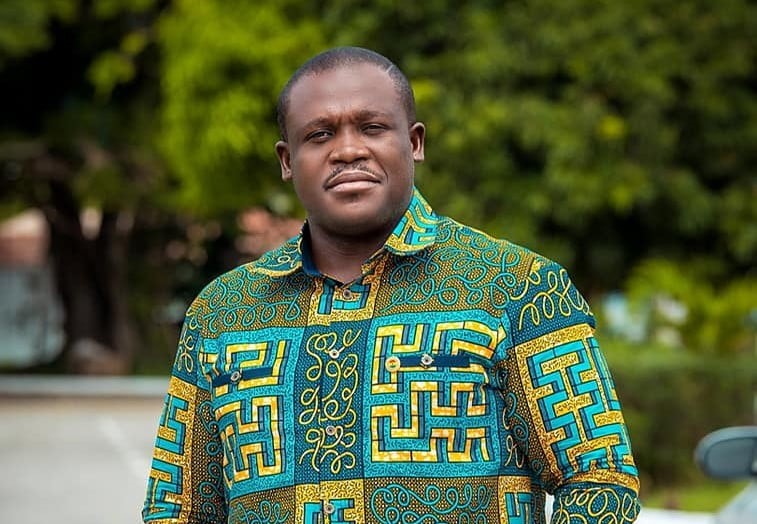
An opposition lawmaker in Ghana, Samuel Nartey George has accused the country’s governing New Patriotic Party (NPP) of undermining the efforts of previous governments to improve the work, life, and livelihood of journalists.
Commenting on Ghana’s latest ranking on the 2024 World Press Freedom Index published by Reporters Without Borders on May 3, 2023, the legislator said:
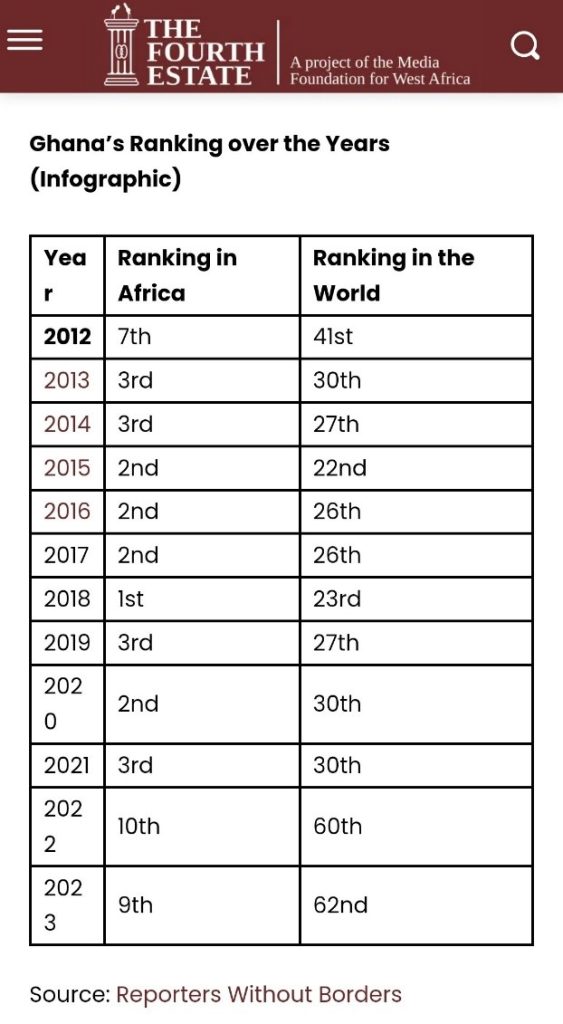
“It should be heart-warming to see a 12-place jump in our ranking from 62nd last year to 50th this year. I have noted the elation of government spokespersons as they gleefully point to this as yet another phantom achievement of the failed government. The fact remains that this government took over office with Ghana ranked 26th in the world and 2nd in Africa.
They have overseen the slump from such great heights to a shambolic and shameful 62nd in the world and 10th in Africa behind countries like Burkina Faso and Niger who have military dictators. The reasons for our slump over the past few years are killing, kidnapping, unwarranted sentence, physical attacks, arrests, detentions and threats against journalists, the arbitrary shutdown of media houses, bans and seizure of journalists’ equipment amongst others.”
JUSTFACT GHANA has fact-checked three claims made by the legislator when he reacted to the country’s latest ranking on the World Press Freedom Index
Claim 1: Sam George claimed the current regime took over from the previous government at a time the country was ranked 26th in the world and 2nd in Africa on the 2016 World Press Freedom Index.
Verdict: This is true. Data released by Reporters Without Borders showed Ghana ranked 26th in the world and 2nd on the continent on the 2016 World Press Freedom Index with a global score of 82.05 percent. The highest ranked country in Africa on the 2016 Index was Namibia which placed 17th globally with a score of 84.85 percent, the report has revealed. The other best performing countries in Africa apart from Namibia and Ghana were Cabo Verde which was 32nd globally with a score of 80.18 percent, followed by South Africa, Burkina Faso, and Botswana. Ghana currently occupies the 50th position in the world on the 2024 Index with a global score of 67.71 percent and the 6th best performing country on the continent, the 2024 report has said.
Claim 2: The lawmaker again claimed that President Akufo-Addo supervised a “shambolic and shameful” performance on the World Press Freedom Index in 2023 with “Ghana ranking 62nd in the world and 10th in Africa.”
Verdict: This is misleading. Although Ghana ranked 62nd on the 2023 World Press Freedom Index published by Reporters Without Borders, the country placed 9th in Africa with a global score of 65.93 percent. The first placed country in Africa on the 2023 index was Namibia which was 22nd globally with a score of 80.91 percent, the report has revealed. The other best performing countries in Africa after Namibia were South Africa, Cabo Verde, Seychelles, Gambia, Ivory Coast, Burkina Faso, and Niger.
Claim 3: Sam George further claimed that Ghana’s poor performance on the World Press Freedom Index has been due to “killing, kidnapping, unwarranted sentence, physical attacks, arrests, detentions and threats against journalists, the arbitrary shutdown of media houses, bans and seizure of journalists equipment amongst others.”
Verdict: This is false. Although a total of 38 radio stations were shut down in Ghana in 2017 and 97 others fined for failing to renew their licenses, it cannot be said that the country’s poor performance on the World Press Freedom Index is solely due to “killing, kidnapping, unwarranted sentence, physical attacks, arrests, detentions and threats against journalists.” Press freedom has been defined by Reporters Without Borders as “the ability of journalists as individuals and collectives to select, produce, and disseminate news in the public interest independent of political, economic, legal, and social interference and in the absence of threats to their physical and mental safety.” Data available at the Reporters Without Borders has shown that the World Press Freedom Index considers five distinct categories or indicators in the assessment of countries. These indicators are political context, legal framework, economic context, sociocultural context and safety. The political context explores factors in the “degree of support and respect for media autonomy vis-à-vis political pressure from the state or from other political actors.” Also, it considers the level of acceptance of a variety of journalistic approaches satisfying professional standards, the World Press Freedom Index has disclosed. The economic indicators on the other hand explore the economic constraints linked to governmental policies, non-state actors (advertisers and commercial partners) and media owners “seeking to promote or defend their business interests.” Equally, the legal indicators look at the degree to which journalists and media organisations operate without censorship and discrimination. It is, however, the safety indicators that considers any form of harassment, hateful speech, smears and other threats targeting journalists or their loved-ones.
Conclusion:
Sam George was right when he said that the current regime took over from the previous government at a time the country was ranked 26th in the world and 2nd in Africa on the 2016 World Press Freedom Index. However, his claim that the “killing, kidnapping, unwarranted sentence, physical attacks, arrests, detentions and threats against journalists” are responsible for Ghana’s poor performance on the index is not true.